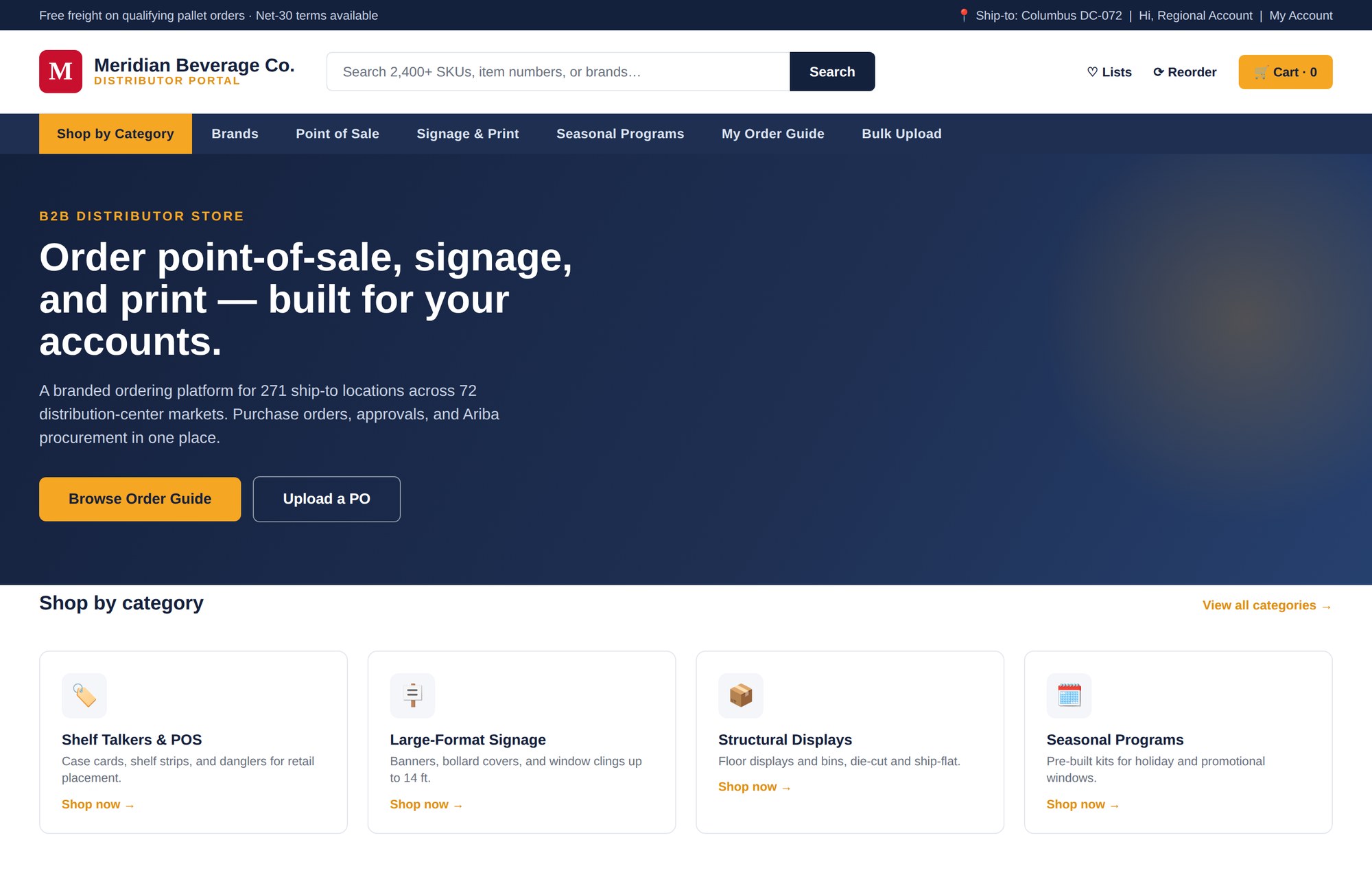
 Brand-anonymized reconstruction (Meridian Beverage Co.) to respect client confidentiality.
Enterprise E-Commerce · Platform Leadership
Building, Owning & Transforming a Print-on-Demand Platform
Three years from prepress designer to platform lead — a self-directed UX audit, a systematic rebuild across six layers of friction, and a Punchout-to-Ariba integration coordinating four organizations to ship Meridian Beverage Co.'s B2B procurement store.
$208K
GMV processed
560
Purchase orders
271
Ship-to locations
Platform Work · 2 Parts
Splotchy Signs — a 467-product web-to-print platform I owned end to end: first making the design tool trustworthy, then giving the catalog a structural spine, then preparing it for enterprise.
Testing & QA · Information Architecture · Systems
Owning a Web-to-Print Platform End to End
The unglamorous core of product work: I audited a live customizer until it was reliable, built the attribute, tag, and SEO architecture that organized hundreds of products, then drove the artwork, templates, and enterprise-integration testing that readied it for scale.
Part 1 · QA
Hunting the bugs that made a design tool unusable →
Part 2 · IA & SEO
Giving a sprawling catalog a spine →
